
Museum temperature & humidity monitoring
See temperature and humidity in the context of the collection.
LÆFAN helps collections teams monitor temperature and relative humidity across galleries, stores, cases and temporary exhibitions, then connect excursions, investigations and evidence to the place they belong.
Temperature trendsRelative humidityEnvironmental ProfilesExcursionsEvidence
Collection storeCurrent conditionsWithin profile
Temperature19.2°CExpected 17–21°C
Relative humidity49%Expected 45–55% RH
TemperatureRelative humidity
Last 24 hoursNo active excursion
Readings need context
The same number can mean different things in different collection environments.
Temperature and relative humidity are most useful when they are interpreted alongside the location, collection, expected conditions and recent history. LÆFAN keeps those relationships visible instead of reducing every room to one estate-wide threshold.
Trend, not just snapshot
Understand what changed, when it changed, and how long it lasted.
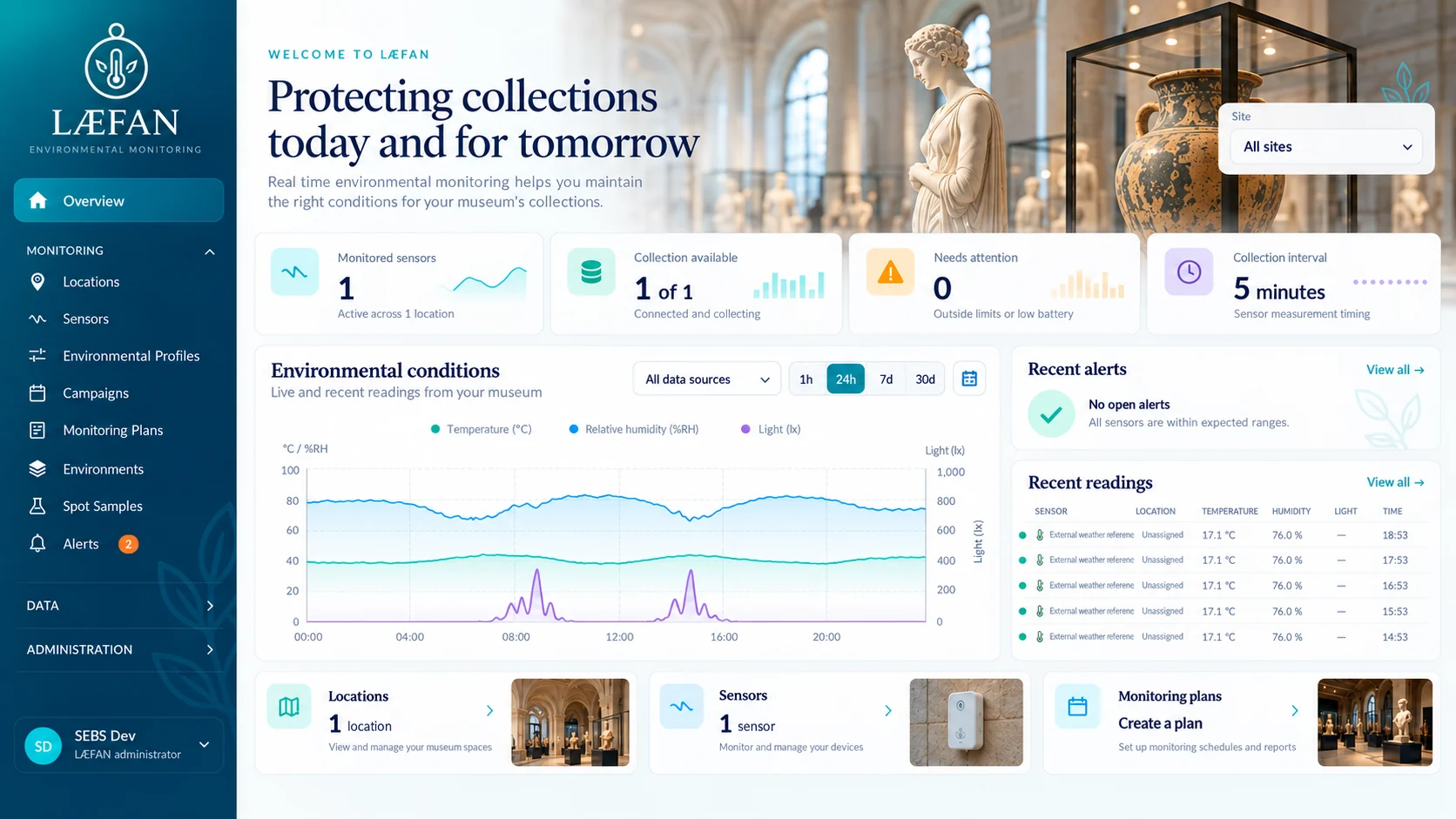
A single reading can be useful, but the pattern over time often tells the more useful story. LÆFAN helps teams review current conditions, trends, excursions and recovery without losing the collection context around the graph.
- Current conditionsSee the latest assessable temperature and RH for each environment.
- Trend over timeReview 24 hours, days, weeks or longer periods without choosing every sensor one by one.
- Duration mattersKeep the length of an excursion visible rather than treating every threshold crossing as equal.
Environmental Profiles
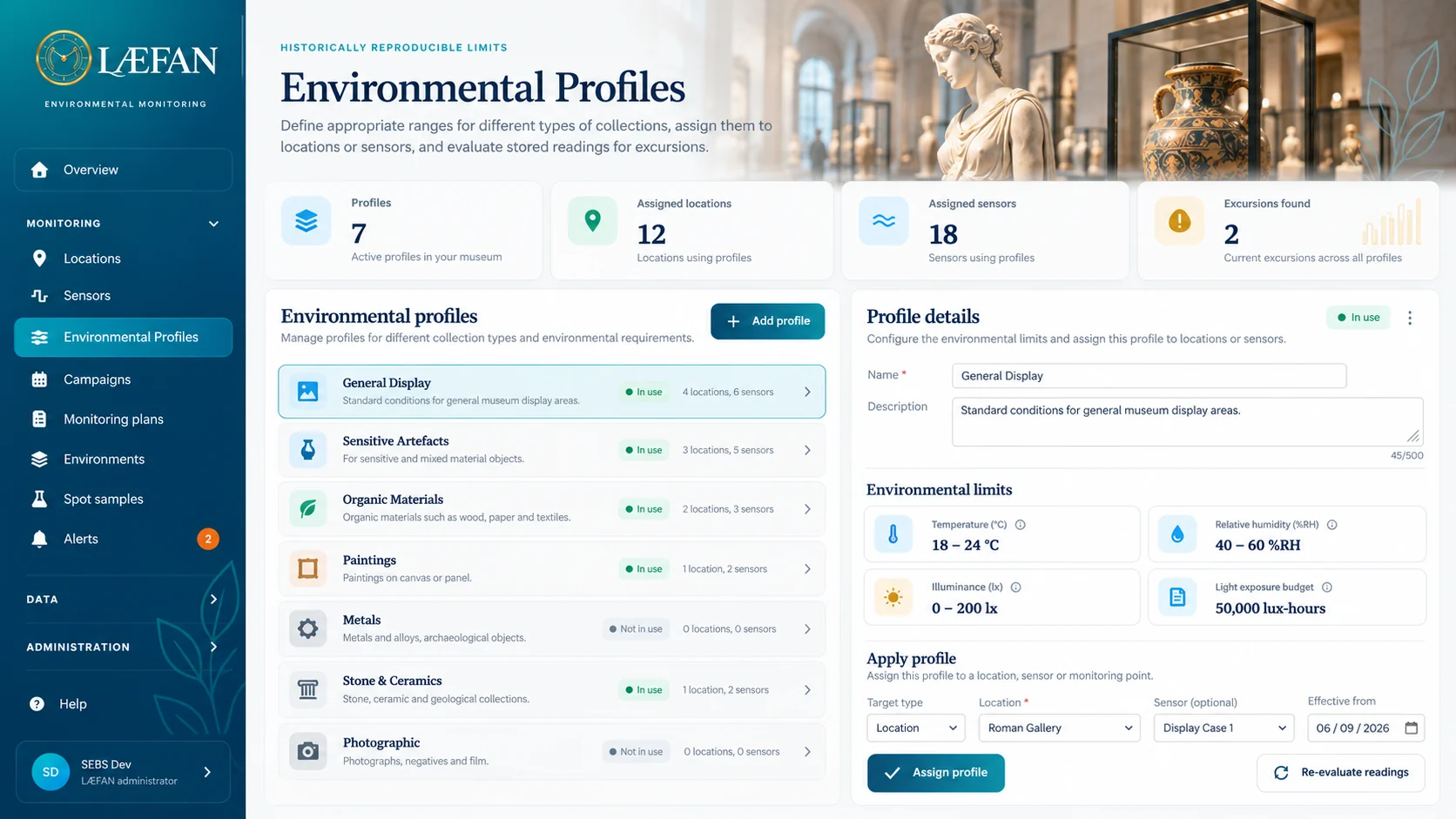
Set expectations for the environment you are actually monitoring.
Profiles let the museum document the temperature and humidity expectations that apply to the room, store, case or temporary display. This avoids applying one arbitrary range across unlike collection environments.
TEMPERATURE17–21°CExample profile range
RELATIVE HUMIDITY45–55% RHExample profile range
These values are illustrative. LÆFAN does not impose universal museum limits: the Environmental Profile records the expectation selected for the collection context.
Explore Environmental Profiles →Excursions & response
Know when conditions move outside expectation without confusing that with a sensor problem.
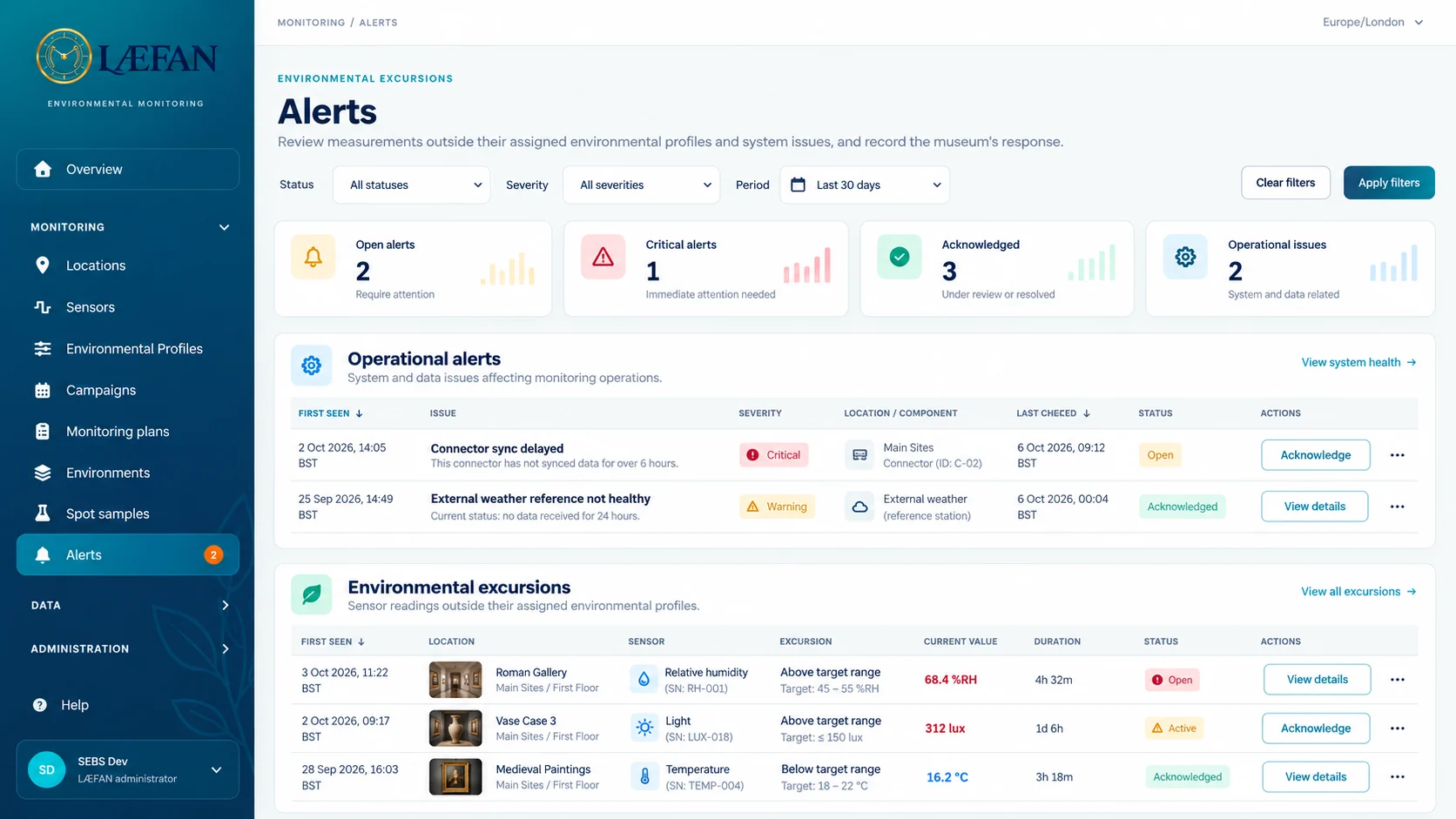
LÆFAN keeps environmental excursions separate from stale readings, offline devices and communications issues. If the environment itself needs attention, the alert remains connected to the investigation and later recovery.
1Condition moves outside profile
→
2Excursion raised
→
3Collections team investigates
→
4Outcome retained
A clearer monitoring record
Separate environmental condition from monitoring health.
This distinction matters when staff need to decide whether the collection environment itself has changed or whether the monitoring source simply needs attention.
Within profile
Temperature and RH are within the Environmental Profile and current readings are available.
Excursion
Current conditions are outside expectation and may need review or investigation.
Sensor delayed
The latest reading is too old to assess the environment confidently. Do not label the room as healthy.
Data restored
The monitoring source is reporting again while the environmental history remains intact.
Existing loggers & sensors
You should not have to throw away useful history to improve the monitoring system.
LÆFAN is designed to accommodate supported connected monitoring, historical logger exports and manual readings while keeping the source and observed time clear.
Connected T/RH sensorsLogger exportsManual readings
→
 LÆFANTemperature & RH in context
→
ProfilesExcursionsReports
Evidence over time
Keep the explanation alongside the graph.
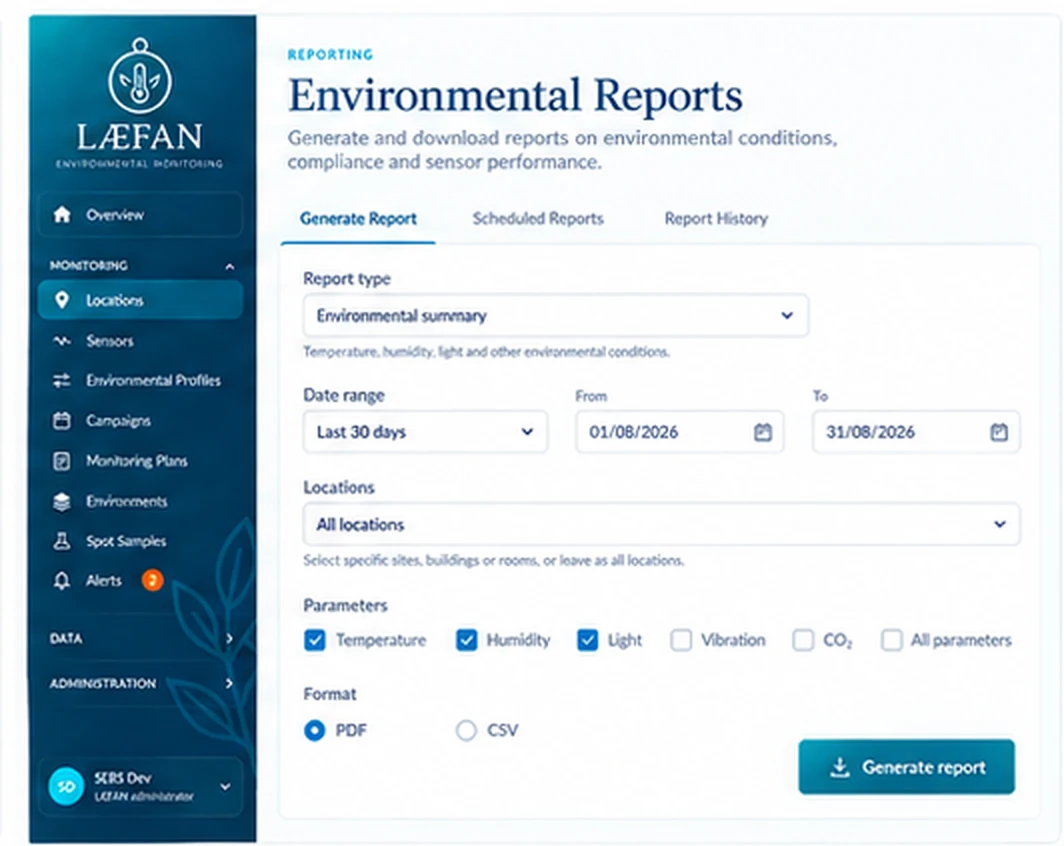
When someone reviews a period later, LÆFAN can retain more than the plotted line: the profile that applied, excursions that occurred, staff observations and the response can all remain part of the environmental record.
- Profile contextKnow what expectations applied during the reporting period.
- Excursion historyRetain when conditions moved outside the selected profile.
- Staff responseKeep investigations and Spot Records alongside the readings.
Questions
Museum temperature & humidity monitoring FAQs
Why monitor temperature and relative humidity in museums?
They help collections teams understand the conditions surrounding objects and collection spaces. Their significance depends on the material, environment and way the readings change over time.
Should every museum room use the same temperature and humidity limits?
No. LÆFAN uses Environmental Profiles so different rooms, cases, stores and exhibitions can be reviewed against expectations suited to their context.
Can existing logger data be brought into LÆFAN?
Supported connected sources, historical logger exports and manual observations can all contribute while retaining their source and observed time.
What happens when conditions move outside the expected range?
LÆFAN can raise an environmental excursion, retain acknowledgement and investigation, and keep the subsequent recovery with the environmental history.
Temperature & humidity monitoring with LÆFAN
See your collection environments in context.
Show us the temperature and humidity monitoring you already use. We can demonstrate how LÆFAN would bring readings, expectations, response and evidence together.