
Measure
Bring current illuminance into the environmental record.
Museum light & UV monitoring
LÆFAN brings illuminance, display period and collection context together so galleries can monitor both current light levels and cumulative exposure.
Illustrative cumulative allowance of 100,000 lux hours.
Cumulative exposure
A low light level maintained for a long period still contributes to cumulative exposure. LÆFAN can use lux hours to help collections teams understand how much of a chosen display allowance has been used.
Bring current illuminance into the environmental record.
Calculate lux hours across the actual display period.
Review exposure against the allowance selected for that collection context.
Use warnings and reports before the display period becomes difficult to manage.
Current light
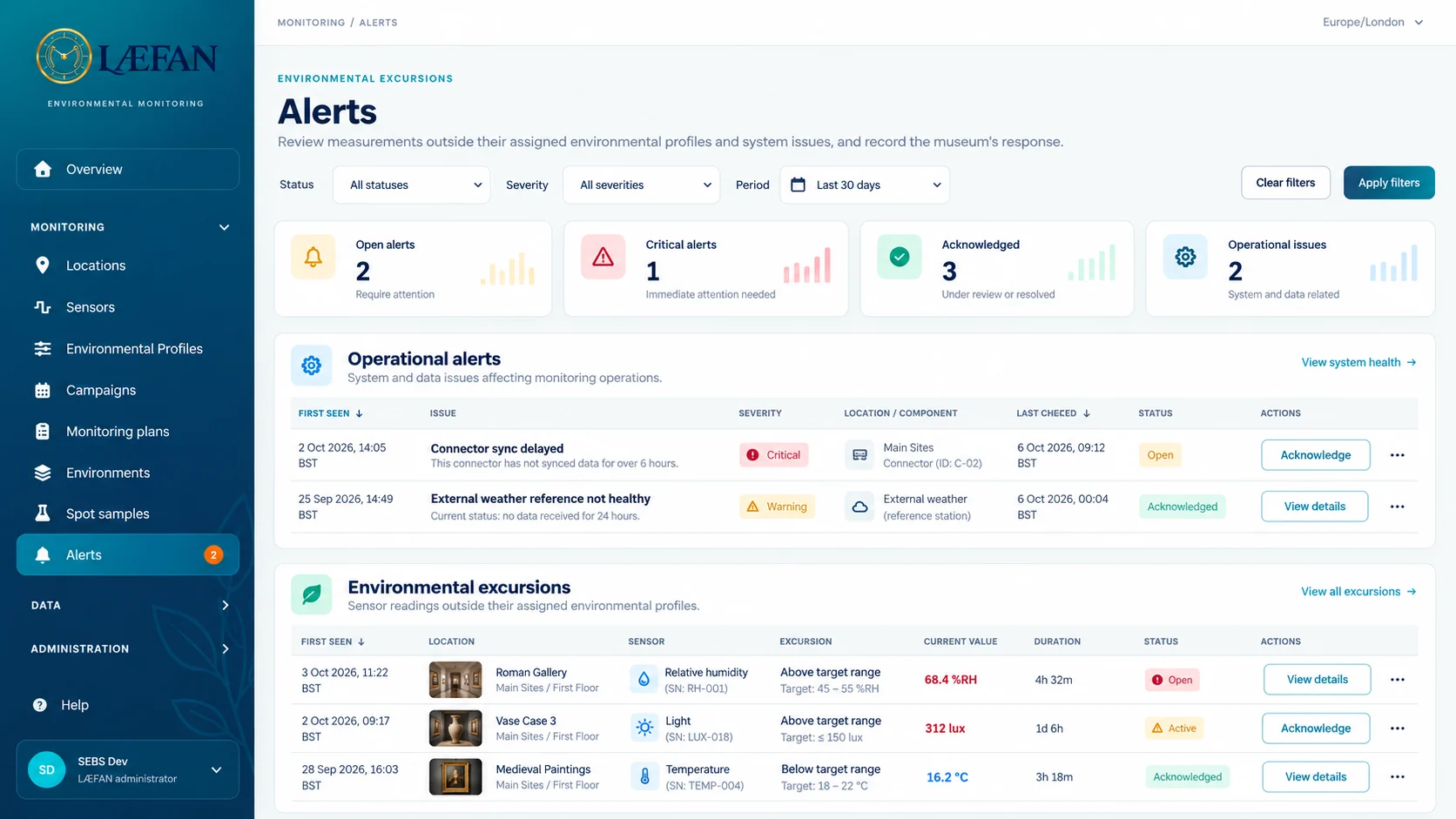
Current lux still matters. LÆFAN keeps that reading attached to the gallery, display case or Campaign so it can be understood in context.
Environmental Profiles
LÆFAN should not present one universal light allowance as though it applied to every object. The relevant Environmental Profile or Campaign records the expectation selected for the material and display.
Example figures on this page are illustrative rather than universal conservation limits.
Explore Environmental Profiles →Warnings before the allowance is exhausted
Warnings can be based on the proportion of an agreed allowance used, for example 75%, 90% and 100%, while current-light excursions remain a separate issue.
Loans & exhibitions
Campaigns give a loan or exhibition its own purpose and date range without duplicating the permanent gallery history.
 LÆFANCumulative exposure
Questions
Light exposure can contribute to irreversible change in sensitive collection materials, so both current intensity and duration can matter.
Lux hours combine illuminance and time, allowing cumulative exposure to be reviewed across a display period.
No. Exposure expectations belong to the collection context recorded in an Environmental Profile or Campaign.
The monitoring architecture is designed to support UV-capable channels where suitable equipment is available, while light and UV remain distinct measurements.
Light monitoring with LÆFAN
See how LÆFAN can connect light exposure, exhibitions and retained evidence across your collection.