Follow a loan period.
Keep the dates, places and environmental context for incoming or outgoing loans together.
Temporary monitoring
Campaigns bring the places, dates and environmental context for a loan, exhibition, investigation or other defined period together, without muddling them into normal day-to-day monitoring.
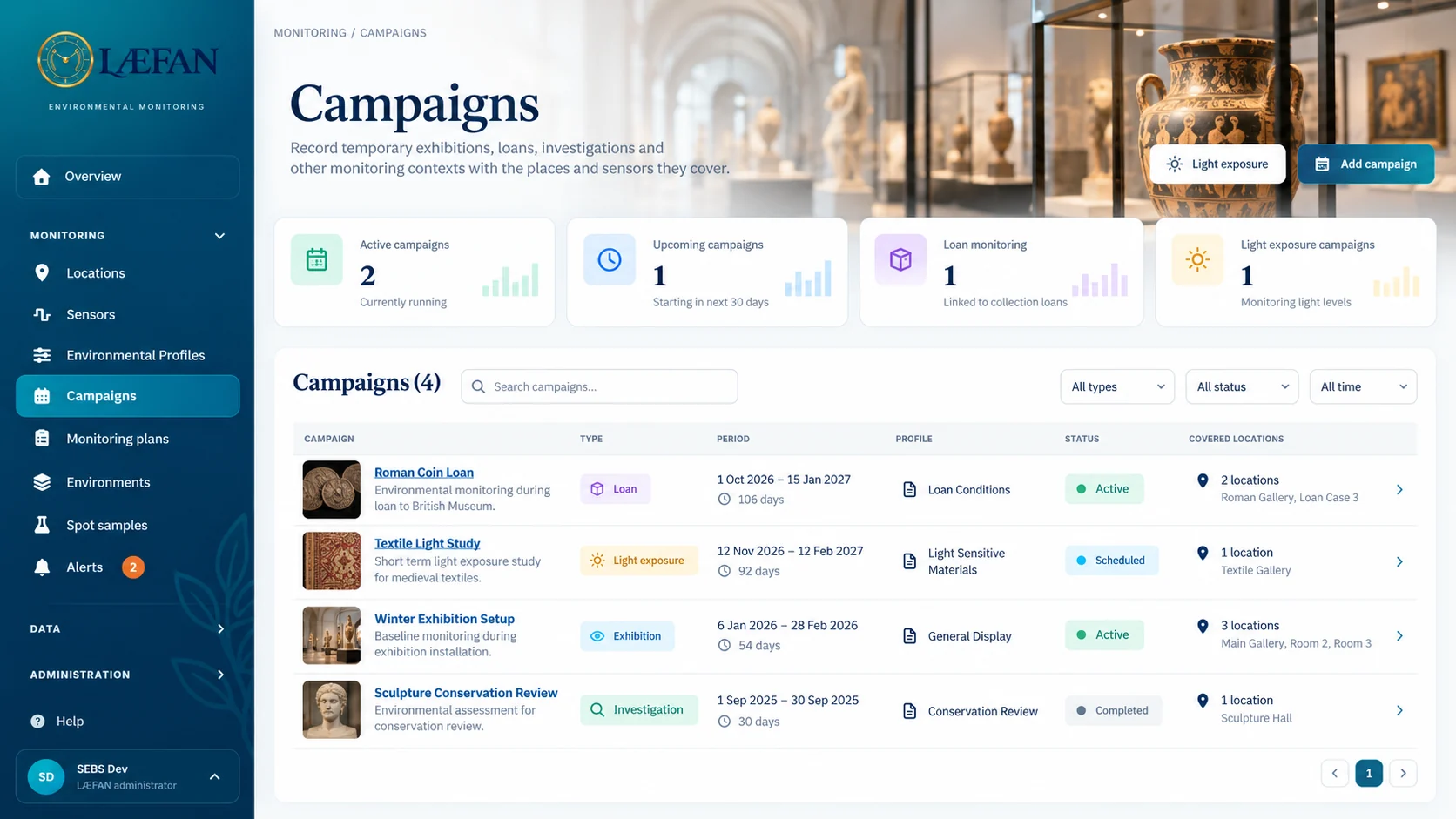
A temporary layer of context
A new loan, a temporary exhibition or a short investigation may use the same rooms and sensors as everyday monitoring, but the evidence needs to remain understandable in that temporary context.
Keep the dates, places and environmental context for incoming or outgoing loans together.
Give an exhibition its own period and record without replacing the normal monitoring of the gallery.
Bring together a defined period of monitoring when the team is investigating a change or conservation concern.
Use a Campaign where a particular season, building change or short-term study needs its own context.
What would you use a Campaign for?
Choose an example to see how a Campaign keeps the temporary reason for monitoring visible alongside the environmental record.
A defined monitoring period for a temporary loan, keeping the display location and agreed environmental context easy to find later.
Campaigns and Monitoring Plans
A Campaign explains why this period matters. A Monitoring Plan explains how the monitoring is carried out. Keeping those jobs separate makes both easier to reuse and understand.
For temporary work, a linked Monitoring Plan can use the Campaign period as its active window, while its individual requirements still decide when checks and readings are expected.
Explore Monitoring Plans →From start to finish
The collection may return to normal monitoring afterwards, but the Campaign record remains understandable as its own period.
Record the purpose, type and dates.
Connect the relevant gallery, store, room or monitoring point.
Keep the relevant Profile and Monitoring Plan connected to the period.
See readings, excursions and checks in the right temporary context.
Spot Records, notes and completed monitoring remain part of the record.
The Campaign can finish while its environmental history remains available for review and reporting.
Close the Campaign, keep the story
Once the loan, exhibition or investigation is over, the useful part is not simply that a Campaign existed. It is being able to understand what was monitored, where, under which expectations and what happened during that period.
Dates & purposeWhy the monitoring period existed and when it applied.
Places & environmental contextWhere the Campaign applied and which Profile gave the readings meaning.
Monitoring activityRelated plans, checks and Spot Records from the period.
Environmental historyReadings and excursions that occurred while the Campaign was active.
Response & reportingNotes, actions and reports that explain what happened next.