
LÆFAN / Reports & evidence

Environmental evidence

Keep the story behind the numbers.

A graph can show what happened. LÆFAN is designed to retain the place, expected conditions, excursion, staff response and monitoring evidence that explain why it mattered.

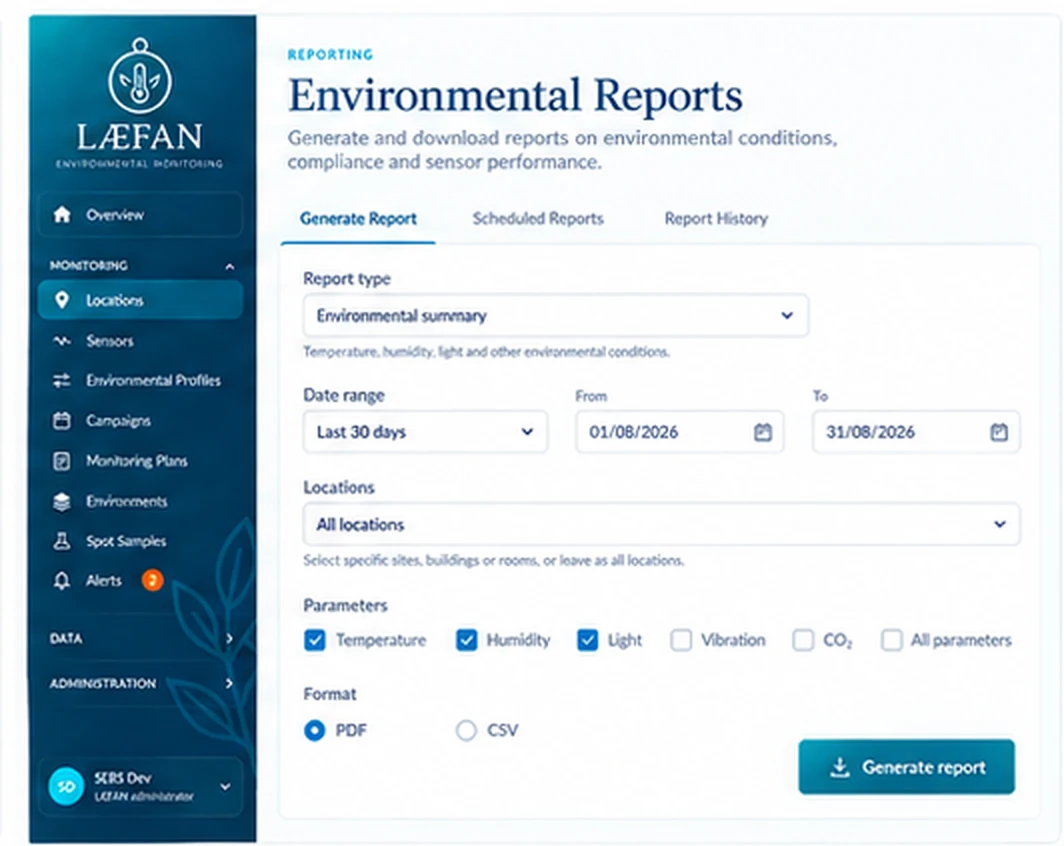
REPORTINGEnvironmental reportsChoose the period, place and parameters, then retain the result alongside the underlying record.
LÆFAN environmental reports screen

More than a PDF

The evidence exists before the report is generated.

Reports are a view of the retained environmental record, not a separate pile of exported files. The useful record is the combination of measurements, provenance, collection context, profiles, excursions, checks and staff response.

ImportantLÆFAN can evidence conditions against the Environmental Profiles your organisation chooses. It does not certify conservation compliance or invent universal limits.

See how excursions and response are retained →

Follow the record

From measurement to evidence, without losing the context in between.

Select a stage to see what should remain attached to the environmental history.

01 · MEASUREMENT

Keep the reading and where it came from.

A useful environmental record starts with the observed value, timestamp, sensor or source, and enough provenance to understand how the measurement entered LÆFAN.

Retain
Reading, unit, observed time and source identity
Useful later
Distinguish genuine history from imported or manually entered data
Do not lose
Source provenance when data is normalised

Reporting views

Answer the question being asked, without rewriting the underlying record.

The same environmental history can be viewed by site, room, collection context, campaign or period. Reports should make the scope and provenance clear.

01

Environmental summary

Temperature, relative humidity, light and other available measurements across a defined period and location.

02

Excursion & response

Show where conditions moved outside the selected profile and retain acknowledgement, investigation and follow-up.

03

Monitoring evidence

Bring scheduled checks, Spot Records and completed Monitoring Plan activity into the same period of evidence.

Explore Spot Records →
04

Campaign period

Report a loan, temporary exhibition or investigation without duplicating the permanent sensor history underneath it.

05

Light exposure

Where appropriate, report illuminance alongside cumulative exposure and the time window that produced it.

06

Data export

Use PDF for a readable retained report or CSV when the underlying measurements need further analysis.

A report should explain itself

Someone reading it months later should not have to guess what the graph meant.

That means the report needs enough surrounding information to establish its scope, not just a chart and an average.

ScopeSite, building, room, case or monitoring point
PeriodStart/end dates and timezone
SourcesSensors, logger imports, Spot Records or connected systems
ContextEnvironmental Profile and Campaign where relevant
ExceptionsMissing data, excursions and unresolved issues
ResponseAcknowledgement, investigation, checks and notes

Example

Roman Gallery · September environmental review

Illustrative workflow
CONTEXTRoman Gallery

General Display profile
First Floor · Main Site

MEASUREMENTSTemperature + RH

Continuous sensors
1 manual light Spot Record

EXCEPTION1 RH excursion

Acknowledged and investigated
No automatic closure from a staff check

MONITORING4 weekly checks

4 completed
0 missed

RETAINED EVIDENCEThe report can show the conditions and the response together.

That is more useful than a graph in isolation when a conservator, lender, auditor or colleague needs to understand what actually happened.

Put it into context

See how readings reach LÆFAN before they become part of the evidence record.

How LÆFAN worksMonitoring & evidence guidance